28-Days-to-Lean Meal Plan
With a strategic plan and unwavering discipline, individuals can achieve significant leanness in a mere 28 days.
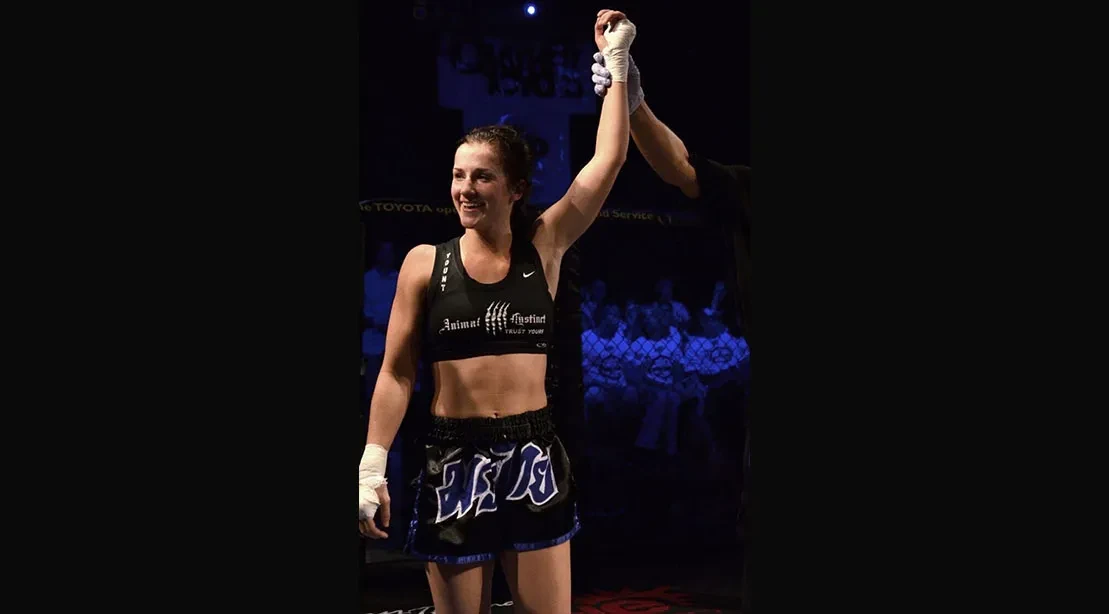
Jess Evans has built an inspiringly successful career instructing thousands on the precise execution of knockout right crosses and uppercuts. While most of her students will never step into a ring against a live opponent, her most valuable lesson as a FightCamp trainer is far more profound: fighting to rise after life delivers a devastating blow.
The Los Angeles-based fitness instructor draws this wisdom from her own litany of personal battles. Evans overcame an abusive relationship that debilitated her both physically and mentally—only to face another crushing obstacle: rebounding from a stroke at age 31. Through it all, she has trained herself to resist flinching—even when she anticipates a devastating haymaker. And when that blow lands? She won’t stay down long—for herself, and for the countless members of her boxing community who rely on her not just for technique tweaks, but for guidance in pursuing their fitness goals.
From Victim to Fighter: The Birth of a Purpose
“I always tell people: don’t pursue combat sports if you’re afraid of getting hit—it’s inevitable,” Evans says. “I’ve been hit so many times by men in boxing that fear no longer holds power over me. That’s where true growth happens: you stop running and start treating fighting like chess—strategic, not survival.”
Boxing has taken Evans across the globe—from Australia to Europe, most recently Guatemala—and she has leveraged her platform to raise awareness for critical causes. Her journey from Rocky-obsessed former video producer to fitness professional began when she was furloughed from her media job.
“I never imagined working in fitness, but I followed the open doors—one after another—and that’s how I got here,” she explains. “I didn’t have a master plan; life unfolded, and I leaned into it.”
Boxing, Evans admits, started as her only means of self-preservation. Over time, it evolved into a mission: teaching women and men that no obstacle is insurmountable—once you absorb the first punch. It took Evans years to internalize this truth.
“Life is fluid; things will derail you, but you have to adapt,” she says. “In fighting, you roll with the punches… and without that mindset, I don’t know how I would have survived my past.”
The Fight for Self: From Abuse to Empowerment
Before fitness or FightCamp, Evans first had to fight for herself.
Raised in a small Missouri town, she led a “sheltered” life focused on academics and athletics—basketball, track, cross country. “Boxing never crossed my mind back then,” she recalls.
College introduced her to a relationship that began as love but devolved into manipulation and isolation. She moved in with her partner, growing distant from her family, as verbal and emotional abuse eroded her self-esteem. A physical altercation finally became the breaking point.
“Many in abusive relationships stay—trapped by seclusion, believing they have nothing outside the abuse,” she says. “I resented him, but I lacked the confidence to leave—until I realized I didn’t want this future.”
With family support, Evans escaped three months later—free, but emotionally and physically shattered. Without a Plan B, boxing became her lifeline.
“A year later, I decided to learn how to fight,” she says. “I don’t know where the desire came from, except a burning need to prove no one could hurt me again without me fighting back.”
The Gym: Foundational Drills and Brutal Lessons
At 5’4” and 90 pounds, Evans sought to rebuild her health and confidence at Kansas City’s Pound for Pound Gym. She was the only woman there—but she was resolute. “I told the trainers I wanted self-defense,” she recounts.
Expecting to throw powerful punches on Day 1, Evans was disappointed: her first sessions with trainers Melvin Wesley and “Big Ron” focused exclusively on foundational (albeit monotonous) drills—running, rope skipping, and basic heavy bag work.
“It was just bag work: rolling, hooking, crossing… plus endless running and skipping,” she remembers.
Her first sparring session was a humbling initiation: a 15-year-old boy floored her with a liver shot. Some days, she left in tears—but she always returned, determined to master the “sweet science.”
To accelerate her progress, Evans resorted to extreme measures: she asked MMA partners to spar with her, urging them to hit her to desensitize herself to trauma.
“I’d do defensive rounds where someone punched me in the head—just to keep my eyes open,” she explains. “I don’t recommend this, but it stemmed from my pain. I needed to learn fast.”
Progress and Purpose: From Tournaments to Global Impact
Within six months, Evans competed in her first tournament—and launched a career that took her worldwide. She added Muay Thai to her skill set, and her health transformed: she fought at a muscular 112 pounds, fueled by a strict macro-counting routine.
“When you’re training that intensely, you have to fuel your body—otherwise, fatigue cripples you,” she says. “I reclaimed a healthy routine.”
For Evans, FightCamp—the at-home platform blending boxing, kickboxing, and HIIT to build strength and resilience—shines because of the transformations she witnesses.
“I’ve seen people go from never touching a bag to mastering it—whether it’s weight loss, technique, or confidence,” she says. “We’re the bridge for people moving from novice to serious training.”
The Stroke: A Second Battle, Won Through Resilience
FightCamp’s community became Evans’ lifeline during her darkest hour: a stroke at 31.
After a FightCamp class, Evans noticed her right hand sliding off her computer. She dismissed it as fatigue—until she couldn’t lift her phone or perform basic tasks. Her manager insisted on an ER visit.
“I didn’t realize how serious it was until the ambulance bay,” she recalls. “Everyone was waiting to put me on a gurney. That’s when I knew: this was life-or-death.”
An MRI confirmed a stroke—initially classified as ischemic (no identifiable cause). But Evans, a fighter at heart, refused to accept uncertainty.
“Fighters advocate for themselves,” she says. “I told the doctors ‘no’—I needed answers.”
Research led her to Hailey Bieber’s stroke journey, prompting her to request a transcranial Doppler (TCD) scan. The result: a patent foramen ovale (PFO)—an untreated heart opening that typically closes by age 4. A week later, she underwent surgery to close it. Months of therapy restored her to 100%.
“A FightCamp member—who works with stroke patients on the East Coast—helped me through recovery,” she says. “The community’s support was invaluable.”
The Link Between Battles: Abuse Prepared Her for Stroke
Evans credits her abusive relationship with giving her the resilience to survive her stroke.
“Without that trauma, I don’t know how I would have fought through this,” she says. “Challenges make us tougher—we carry that strength into future battles.”
From Tragedy to Triumph: A Fighter’s Philosophy
Evans’ journey—from victim to lifelong fighter—mirrors the comeback arcs of her favorite films: Rocky, Million Dollar Baby, Cinderella Man. All echo her belief: fighting isn’t just about the ring—it’s about overcoming life’s obstacles.
Even her entry into fitness was born from adversity: she lost her video production job during COVID. Today, with nearly 300,000 Instagram followers, she shares her message one punch at a time.
“These films show the parallel between fighting and life,” she explains. “The beauty of boxing lies in its ability to teach resilience—to fight through, not just against.”
Advice for Beginners: Fight Through Fear
While boxing’s benefits—improved heart health, endurance, weight loss—are well-documented, many women hesitate to lace up gloves. Evans’ advice? Push past the first punch.
“Life is chaotic, and fear is normal—but chase your goals anyway,” she says. “People who deter you are often scared to act themselves. Don’t let them stop you.”
Boxing, with its endless cycle of self-improvement, teaches empowerment. It turned Evans’ tragedy into triumph—and she wants others to find that power too.
Final Thoughts: Rise After the Knockdown
“Life keeps throwing punches,” Evans asserts. “We have to take the knockdown and get back up. But anything is possible—you just have to believe in yourself.”
For Jess Evans, fighting isn’t just a sport—it’s a way of life. And in that life, she’s proven: the greatest victories come not from avoiding blows, but from rising every time you fall.
Upper Body Workout for Women: Build a Strong Back and Bigger Biceps
Share this article: